We do not need another diet. Perhaps we already have too many — rules about what, how much, and when to eat, lists of forbidden foods, calorie calculations that turn a meal from a moment of joy into an accounting exercise. And yet, despite all this control, many of us feel further than ever from a healthy relationship with food.
The paradox is easy to observe: the more the diet industry has grown over recent decades, the more reported levels of food-related anxiety have increased rather than decreased. External rules — however well-intentioned — often create a cycle of restriction and loss of control, in which food becomes a subject of constant vigilance rather than natural enjoyment.
The reason for this widespread failure is simple, although counterintuitive: our relationship with food matters more than the number of calories on a plate. Intuitive eating proposes a radical shift in perspective — not “what am I allowed to eat?” but “what is my body truly asking for right now?”
Chapter 1. What Intuitive Eating Is
Intuitive eating is an approach that focuses on listening to the body’s natural signals rather than following external rules imposed by diets or meal plans. The concept was first formalized in the 1990s by two American nutritionists as a direct response to the consistent long-term failure of restrictive diets, but its basic principles — trust in the body and the absence of food-related guilt — are as old as traditional eating practices in many cultures, including rural Moldovan culture, where meals followed the rhythm of work and the seasons rather than external calculations.
It is based on several simple principles that are nevertheless profoundly different from conventional diet thinking:
- Listening to the body — recognizing genuine physical signals rather than emotional impulses or artificial schedules.
- Real hunger — distinguishing between genuine physiological hunger and the desire to eat out of boredom, stress, or habit.
- Satiety — the ability to recognize the moment when the body has had enough, without waiting for the sensation of being excessively “full.
- The pleasure of food — accepting that food can and should be a source of joy, not merely fuel or guilt.
This approach is not a diet under another name. It has no lists of forbidden foods and no strict plan to follow. In essence, it is a process of reclaiming an ability we were born with — the ability to know instinctively what and how much to eat — but which most of us have lost somewhere along the way.atea de a ști, instinctiv, ce și cât să mâncăm — dar pe care majoritatea am pierdut-o undeva pe parcurs.
Chapter 2. Why We Have Lost Our Instincts
Young children generally have an intuitive relationship with food: they eat when they are hungry and stop when they are full, without calculating anything. This natural ability gradually erodes under the pressure of several factors associated with modern life.
Eating on the go — meals consumed in a hurry, between two activities, without genuine attention to the act of eating — disconnects us from the body’s signals. When you eat in five minutes, while standing or in the car, the brain does not have enough time to register hunger and satiety sensations correctly.
Using a phone at the table adds another level of distraction. Dividing your attention between a plate and a screen means that the experience of the meal is partially “lost” — you are eating, but you are not truly present in the act.
Chronic stress alters the hormonal signals of hunger and satiety, often pushing us towards calorie-dense foods as a rapid mechanism of emotional regulation. Emotional eating — using food in response to emotions such as anxiety, sadness, or boredom rather than in response to physical hunger — becomes an automatic pattern for many people, one that is difficult to notice without a conscious pause.
All of this is compounded by a cultural factor specific to recent decades: constant exposure to idealized images of the “perfect” body and meal on social media. Comparing our own plate or body with carefully selected and edited images fuels an impossible standard, distancing us even further from the genuine signals of our own body and pushing us towards rigid external rules instead of self-trust.
Chapter 3. The Philosophy of One Life Gastronomy
LAt One Life, gastronomy is not conceived as a list of dishes, but as a coherent philosophy aligned with the principles of intuitive eating and the symbolism of the Walnut pillar — roots, longevity, and authentic abundance.
- Local ingredients — sourced from the Condrița area and its surroundings, rather than from long and anonymous supply chains.
- Seasonality — the menu changes according to what nature provides during each period of the year, rather than following a fixed, universal list.
- Freshness — products reach the kitchen shortly after being harvested or purchased, preserving their nutritional value and authentic taste.
- Simplicity — dishes that do not conceal the main ingredient beneath sauces or complicated techniques, but instead bring it to the forefront.
- Reinterpreted traditional dishes — inherited recipes from the Moldovan region, reconsidered for today’s tastes and needs without losing their roots.
This philosophy is directly connected to the walnut tree symbol found in the One Life identity — a tree that grows for hundreds of years, with deep roots and fruit traditionally associated with abundance and health. Just as the walnut tree does not rush anything — its growth is measured in decades, not seasons — One Life gastronomy rejects haste: each dish is conceived as a small tribute to the time a good ingredient needs to reach maturity.
Chapter 4. How to Eat Mindfully
Mindful eating is the practical component of intuitive eating — a set of simple habits that can be applied at every meal, wherever you are.
- Slow down — give the meal the time it needs instead of trying to “finish” it as quickly as possible.
- Notice the flavours — actively identify the tastes, textures, and aromas of each dish instead of eating automatically.
- Chew slowly — a simple gesture that supports digestion and gives the brain time to register satiety signals.
- No phone — the meal becomes a moment dedicated exclusively to eating rather than one shared with a screen.
- No rushing — accept the idea that a good meal does not need to fit into the shortest possible period of time.
A simple exercise often used as a starting point for mindful eating is to eat the first few bites of a meal in complete silence, without conversation or any other activity — directing your attention only towards taste, texture, and temperature. Most people who try this exercise for the first time are surprised to notice how rarely they eat this way in everyday life.
You do not eat less when you eat mindfully. You eat exactly as much as you need — and you genuinely enjoy every bite.
Chapter 5. Why Local Ingredients Matter
Choosing local ingredients is not merely an aesthetic preference or a marketing strategy — it has concrete, verifiable benefits.
- Authentic taste — products harvested close to the place of consumption and at full maturity have a much richer flavour profile than those transported over long distances.
- Nutrients — the short period between harvesting and consumption preserves a higher content of vitamins and minerals, which gradually deteriorate during prolonged storage.
- Support for local producers — every meal served at One Life indirectly supports the small-scale economy around Condrița.
- Sustainability — a short supply chain reduces the carbon footprint associated with transportation and excessive packaging.
There is also an often-overlooked dimension: the seasonal predictability of local ingredients gradually restores our connection with the natural rhythms of the year — a connection significantly weakened by the permanent, non-seasonal availability of almost any food in modern supermarkets. When you know that a particular fruit or vegetable is available for only a few weeks each year, the act of enjoying it acquires a different, almost ritualistic value.are doar câteva săptămâni pe an, actul de a-l savura capătă o valoare diferită, aproape ritualică.
Chapter 6. A Gastronomic Experience at One Life
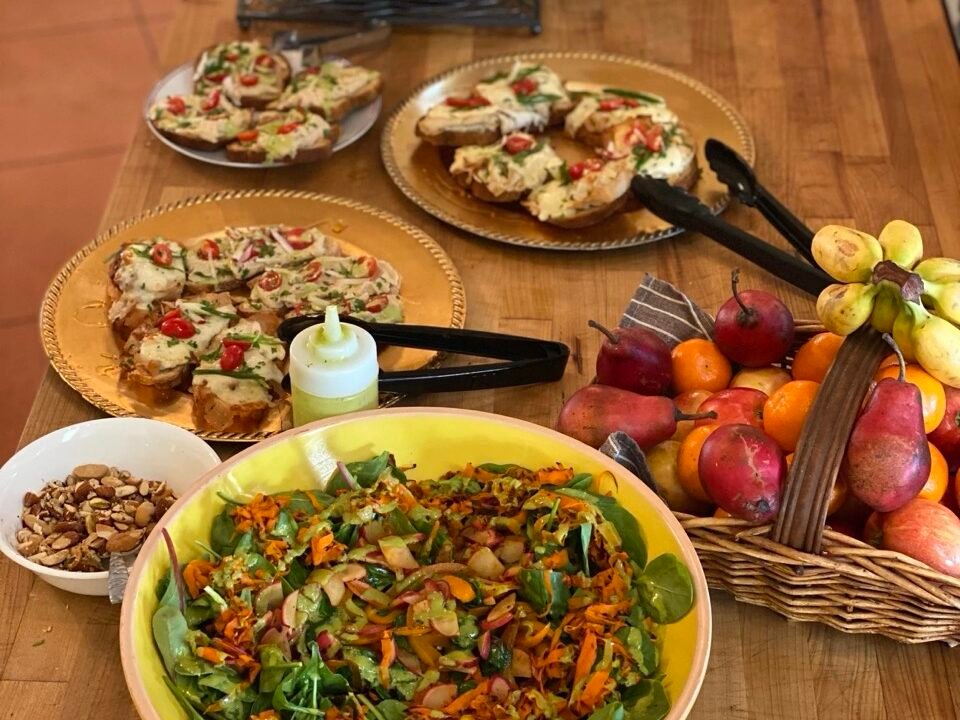
A typical day of dining at One Life follows the natural rhythm of the day rather than an artificially imposed schedule.
Breakfast
Simple and fresh, with local products — a beginning to the day that nourishes without overwhelming.
Tea
A moment of pause, often featuring local herbs, conceived as a ritual of slowing down rather than merely as a drink.
Lunch
Prepared with seasonal ingredients and served at a pace that encourages conversation and presence rather than haste.
Dinner
The final meal of the day, designed to bring the day to a close in the same spirit of calm in which it began.
The Story of Every Dish
At One Life, every dish has an origin and often a story — from the local producer to the reinterpreted traditional recipe. Knowing this story transforms a meal from a simple act of nourishment into an experience of connection with the place and the people around it.
Chapter 7. Benefits
- Better digestion — slow and mindful eating supports the body’s natural digestive process.
- A healthy relationship with food — reducing guilt and excessive control associated with eating.
- Less stress — the meal becomes a moment of refuge rather than an additional source of pressure.
- More energy — fresh and seasonal foods support a consistent level of vitality throughout the day.
Concluzie
At One Life, we do not serve only food. We serve time, tranquillity, and respect for the body.
Intuitive eating is not a quick method or a temporary solution — it is the gradual recovery of a natural relationship that has been lost over the course of a life lived too quickly. It does not require perfection and has no clearly defined endpoint; rather, it is a practice that you return to, meal after meal, with patience towards yourself.
At One Life, every meal is an invitation to slow down, listen, and once again enjoy the simple and profound act of nourishing yourself.